What is the defference of Three Fundamental Weaves of Carbon Fiber Fabric (Plain, Twill, Satin)
Mar 16,2026 | CarbonInn Composites
The performance of carbon fiber composites is largely determined by the structural design of its internal reinforcement—the carbon fiber fabric. The interlacing pattern of warp and weft yarns in space directly dictates the strength, modulus, and overall performance of the final composite part.
In the realm of fabric structures, all complex textures originate from a most basic logical unit: the Primary Weave (or Fundamental Weave). Its precise definition is:
Within one complete weave repeat, each warp or weft yarn has only one intersection point that differs in attribute from the others. In other words, on a single yarn system, there is either only one warp interlacing point (with the rest being weft points) or only one weft interlacing point (with the rest being warp points). Weaves satisfying this condition are termed Primary Weaves.
All woven fabrics derive from this concept. Plain, Twill, and Satin weaves constitute the three cornerstones of fabric construction. Whether it's derivative weaves, combined weaves, compound weaves, or elaborate jacquards, they all evolve from these three basic structures. Therefore, they are respectfully referred to as the "Three Fundamental Weaves" in the industry.
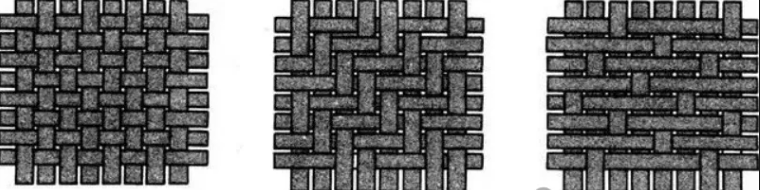
Plain Twill Satin
01 Plain Weave
Definition: Warp and weft yarns interlace alternately, one over and one under, in a regular sequence.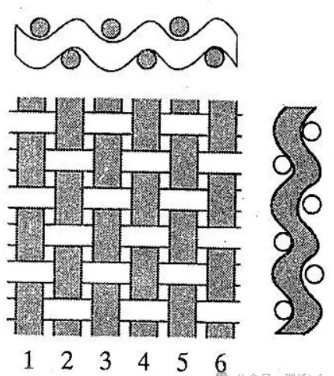
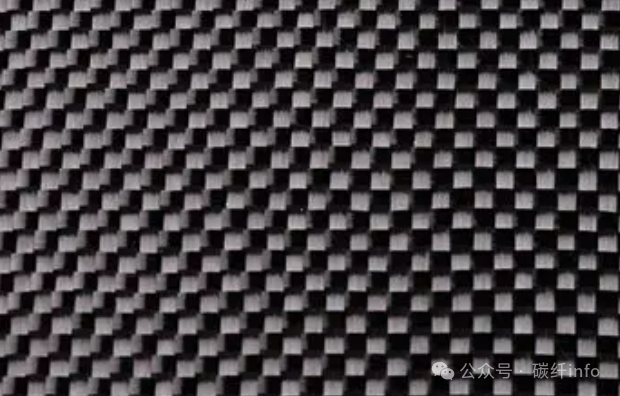
Characteristics of Plain Weave Fabric:
-
Mechanical Properties: It features the highest interlacing frequency, maximum yarn crimp, and very short float lengths. This endows the fabric with excellent firmness and abrasion resistance, and a relatively firm hand feel. However, its resilience is comparatively low, and the surface luster is subtle and restrained.
-
Structural Density: Due to the interlacing points, the spacing between yarns is limited. Therefore, the achievable density of plain weave is relatively lower. Under the same specifications, it is the lightest among the three fundamental weaves.
-
Appearance & Process: The appearance on both sides (face and back) is identical, presenting a flat and neat surface. Benefiting from the very short floats, the fabric exhibits the best resistance to snagging and fraying. Conversely, this structure is also relatively easy to unravel.
One-Sentence Summary: Plain weave exchanges the simplest interlacing logic for the most扎实 structural stability.
02 Twill Weave
Definition: Interlacing points are arranged continuously along a diagonal line, forming a distinct diagonal rib on the fabric surface.
Based on the direction of the diagonal line:
-
Right-hand Twill (↗): The diagonal runs from the lower left to the upper right.
-
Left-hand Twill (↖): The diagonal runs from the lower right to the upper left.
![]()
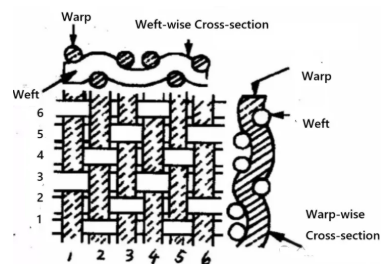
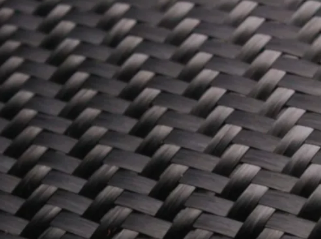
Characteristics of Twill Weave Fabric:
-
Mechanics & Hand Feel: Compared to plain weave, the number of interlacing points is reduced, and float lengths are correspondingly longer. This results in a more supple hand feel, enhanced luster, and better elasticity and wrinkle resistance. However, the reduction in interlacing points also slightly weakens the binding force between yarns, meaning absolute strength is marginally lower than that of plain weave.
-
Structural Density: With fewer interlacing points, yarns have more space to be packed closely. Therefore, twill weaves can achieve higher warp and weft densities than plain weave, making the fabric feel thicker and more substantial.
-
Appearance Features: The direction of the diagonal lines on the face and back of the fabric is opposite, creating an asymmetrical visual effect.
03 Satin Weave
Definition: Warp and weft interlacing occurs only once for every four or more yarns. The interlacing points are isolated, non-continuous, and evenly distributed throughout the weave repeat. The fabric surface is predominantly covered by continuous warp floats or weft floats.
Based on the yarn type predominantly floating on the face:
-
Warp-faced Satin: Warp floats are dominant on the surface.
-
Weft-faced Satin: Weft floats are dominant on the surface.
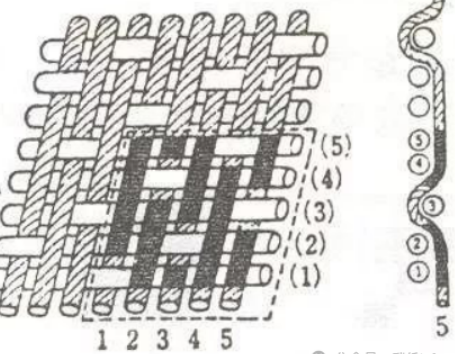
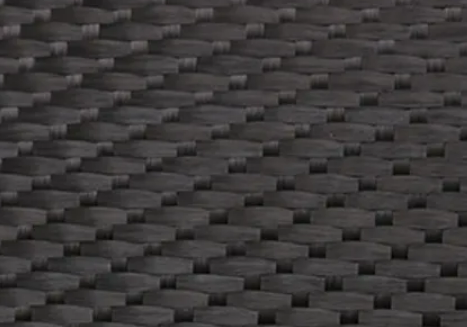
Characteristics of Satin Weave Fabric:
-
Optics & Touch: Exceptionally long floats almost entirely cover the fabric surface, with interlacing points hidden beneath them. This structure allows light to be reflected uniformly by long yarn segments, resulting in the most lustrous, glossy appearance among the three. The hand feel is smooth, drape is excellent, and the texture is soft.
-
Structural Density: With the fewest interlacing points, yarns have the highest degree of packing freedom. Thus, satin weaves can achieve the maximum density among the three fundamental weaves, making the fabric feel even more substantial and full.
-
Process Limitations: The long floats are a double-edged sword. While providing luster and softness, they also make the fabric surface more susceptible to fraying from abrasion and offer relatively lower resistance to snagging.
One-Sentence Summary: Satin weave exchanges almost long floats for ultimate visual appeal and tactile softness, representing an elegant balance between aesthetics and construction.
Comparative Summary of the Three Fundamental Weaves
To facilitate comparison, the core performance tendencies of the three weaves are summarized below:
| Performance Indicator | Tendency Ranking |
|---|---|
| Structural Firmness | Plain > Twill > Satin |
| Luster/Gloss | Satin > Twill > Plain |
| Softness / Flexibility | Satin > Twill > Plain |
| Achievable Density | Satin > Twill > Plain |
| Float Length | Satin > Twill > Plain |
| Hand Feel (Rigidity) | Plain (Firmest) — Twill (Moderate) — Satin (Softest) |
Conclusion
The rigidity of plain weave, the fluidity of twill, and the luster of satin—these three fundamental weaves define the basic characteristics of carbon fiber fabrics through the simple art of interlacing warp and weft. Understanding them is key to deciphering the invisible "skeletal logic" behind the performance of composite materials.
1 Kommentare